The danger of mold
Source: https://wellnesskk.net/diseases/fungus/
Mold Infection – Fungus – Yeast Connection
Yeast Syndrome
The condition where fungal infection (representative fungus is Candida) contributes to overall poor physical condition, weakened immunity, and various chronic diseases is collectively called “Yeast Syndrome.”
Fungi include, besides Candida, ringworm, yeast bacteria, and yeast fungi. In addition, red mold and black mold are also types of fungi. Fungi prefer high humidity, dark, and warm environments, so they easily grow inside the human body.
When fungi grow too much inside the body, the body’s resistance decreases. Then, it falls into a vicious cycle where fungi increase even more. The sugars and fermented foods that humans eat become food for the mold inside the body, so the mold inside the body can also grow through diet. Moreover, modern people ingest large amounts of antibiotics, so the microbiome environment inside the body is affected, creating an environment where mold grows easily.
Internal mold infection is rampant among modern people. Yeast Syndrome can be one of the main causes when addressing unexplained malaise.
Common Symptoms of Yeast Syndrome
Depending on whether the mold infection site is the whole body, centered on the respiratory tract, or centered on the intestines, and further on the amount of mold infection, symptoms vary from person to person.
Mold bacteria originally exist inside the human body as resident bacteria. Normally, they coexist in balance with other bacteria inside the body and do not cause any harm, but once they increase to a pathological infection amount, natural healing is impossible.
The more the mold bacteria increase, the more the person’s body immunity is lost, and then the mold bacteria become even easier to increase, falling into a state like sinking deeper and deeper into a bottomless swamp. When the amount of mold infection becomes massive, many people become aware of fatigue.
Regarding mold infection, “it will recover if I sleep a lot” has almost no meaning. Even after sleeping, fatigue doesn’t go away, the head doesn’t become clear, a feeling like fog or haze hanging over the head, becoming sleepy after meals, headaches, etc., are often accompanied.
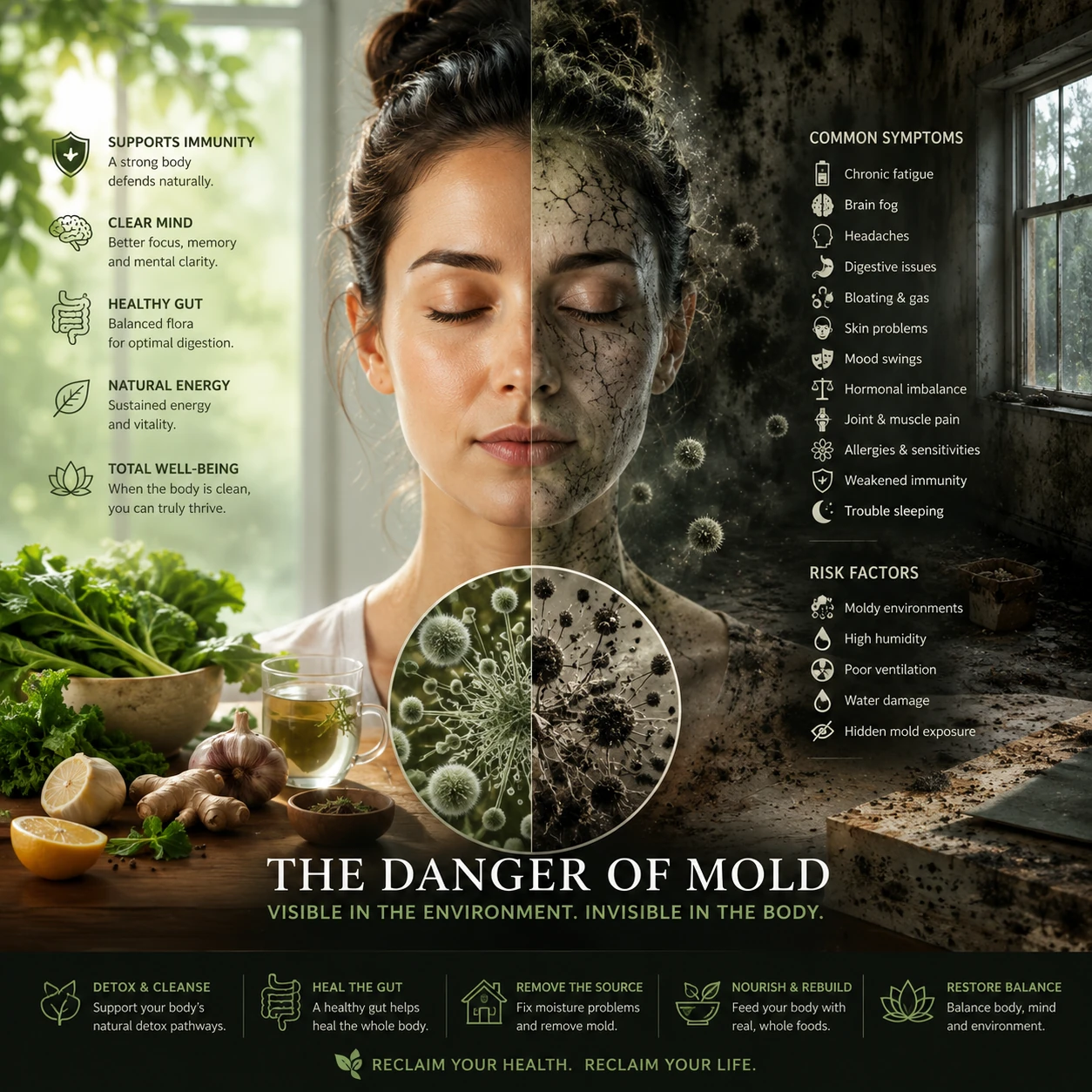
Symptom Checklist
If many of the following apply, please keep Yeast Syndrome in mind:
- Easily tired, hard to recover even after resting
- Abdominal bloating
- Become sleepy after eating (especially flour, carbohydrates, sugars)
- Abdominal pain
- Diarrhea, constipation
- Burping, other signs of digestive abnormalities
- Reflux esophagitis
- Helicobacter pylori infection (there can be mixed infections)
- Farts smell bad, lots of gas
- Have delayed-type food allergy
- Leaky gut (intestinal leakage syndrome)
- Migraine
- Dizziness
- Foggy brain
- Decreased learning ability
- Decreased memory
- Scattered concentration, things don’t enter the head, conversation doesn’t hold, thoughts don’t organize, emotional unease, irritation
- Headache like being tightly tightened by a hoop
- Insomnia
- Depressive symptoms
- Irregular menstruation, menstrual pain, ovulation disorder, infertility, PMS
- Decreased libido
- Skin roughness, acne, flushed face, rash, hives, psoriasis, atopic eczema, dry skin
- Easily swollen
- Addiction to sugars, sweets
- Hormone abnormalities (thyroid, ovary, testis, adrenal, pancreas/diabetes, etc.)
- Joint pain, muscle pain, muscle weakness, joint inflammation
- Feel bad with chemical smells (perfume, fabric softener, tobacco, etc.)
- Recurrent Candida vaginitis
- Urinary tract infection
- Repeated low-grade fever
- Physical condition worsens in moldy-smelling or damp rooms
- Symptoms worsen when eating certain foods
- Suffering from collagen disease, autoimmune disease
Why is Yeast Syndrome Increasing Now?
Risk Factors
- Abuse of antibiotics
- Processed foods, refined foods (like bread and sweets, meals are mostly processed foods)
- Drinking alcohol, binge eating, eating right before bed
- Eating fast
- Delayed-type allergy, leaky gut
- Meat-eating boom (antibiotics are used to make livestock grow faster, so those antibiotics remain in the meat)
- Decreased digestive power (abuse of stomach medicine or laxatives)
- Long-term administration of oral contraceptives
- History of systemic steroid administration
Die-off Phenomenon
The whole-body uncomfortable reaction that occurs because endotoxins from the bacteria that died at the initial stage of infectious disease treatment are released.
When exterminating chronic internal mold infection or intestinal putrefaction bacteria with medicine, the bacteria release endotoxins (endotoxin) and die. This endotoxin is a harmful organic compound, so if it suddenly floods into the body like a flood, the body may temporarily experience intense symptoms such as abdominal pain, headache, malaise, drowsiness, nausea, fever, joint pain, etc., as whole-body uncomfortable symptoms.
References
Jawhara S. How Gut Bacterial Dysbiosis Can Promote Candida albicans Overgrowth during Colonic Inflammation. Microorganisms. 2022 May 12;10(5):1014. PubMed
Lopes JP, Lionakis MS. Pathogenesis and virulence of Candida albicans. Virulence. 2022 Dec;13(1):89-121. PubMed
Talapko J, et al. Candida albicans — The Virulence Factors and Clinical Manifestations of Infection. J Fungi (Basel). 2021 Jan 22;7(2):79. PubMed
Kiran NS, et al. The gastrointestinal mycobiome in inflammation and cancer. Med Oncol. 2025 May 5;42(6):195. PubMed
De Santis B, et al. Role of mycotoxins in the pathobiology of autism: A first evidence. Nutr Neurosci. 2019 Feb;22(2):132-144. PubMed